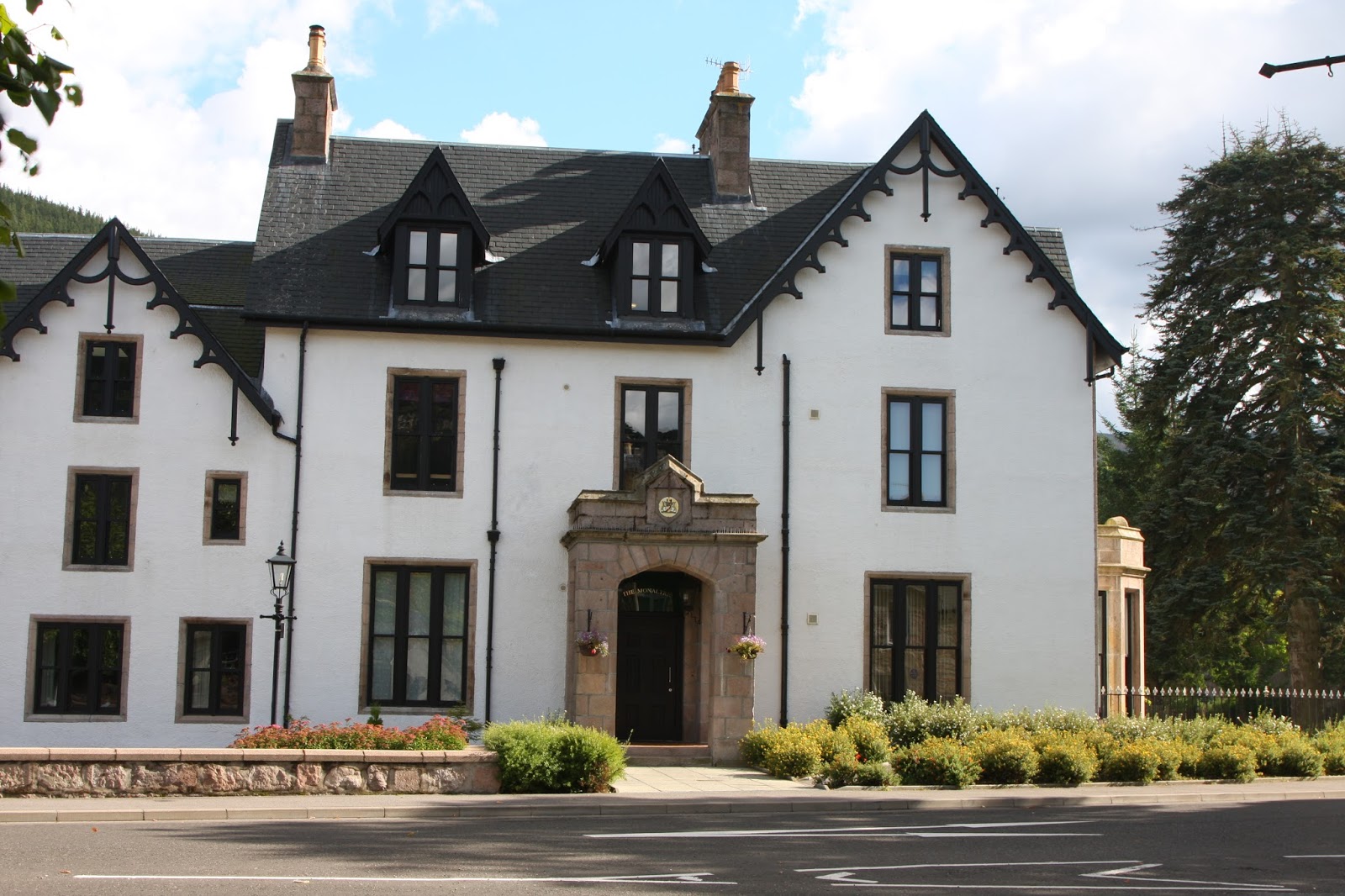
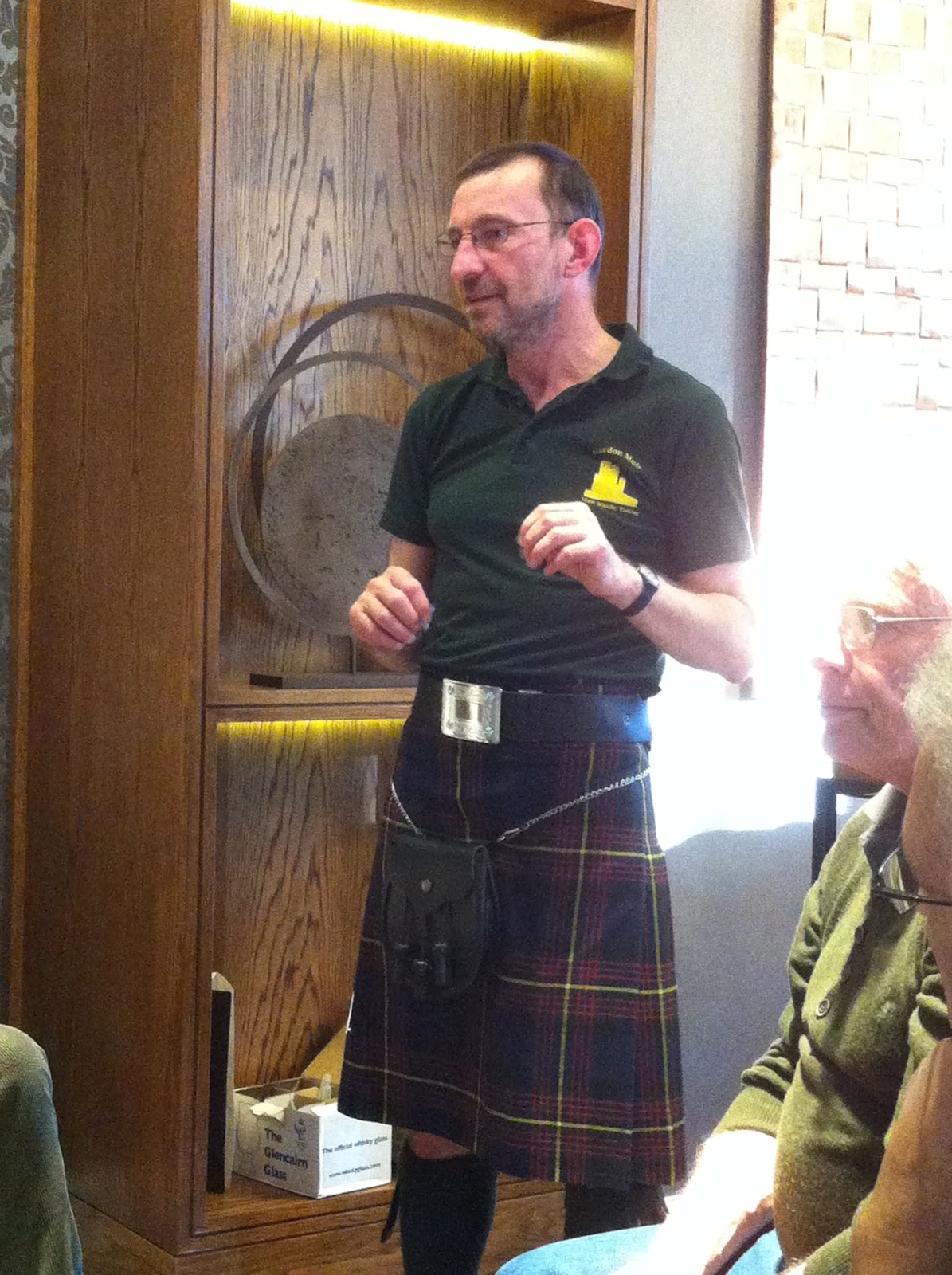
After our introduction to David Mair, Balvenie Ambassador Extraordinaire, he gave us a bit of history about the distillery and the process of making malt whisky. Balvenie is one of the most famous names in the world of whisky (and for good reason....it's incredibly delicious). The distillery produces over 5.5 million liters of spirit each year and is considered to be a "complete distillery" since every production process takes place on-site, from growing barley on land adjacent to the distillery (the only distillery to do this), to malting and having their own cooperage.

Balvenie Barley
Balvenie opened in 1892 by William Grant, who wanted to build a new distillery in order to help Glenfiddich, his other distillery, meet consumer demand. Grant renovated the nearby Balvenie House and it's outbuildings, then bought and installed surplus equipment from the Lagavulin and Glen Albyn distilleries. The distillery's success was almost instantaneous, following on from Glenfiddich's impressive beginnings. Early on, most of the whisky produced at Balvenie was put towards the range of blended whiskies produced by Grant & Sons (especially Grant's which has been one of the UK's top selling blends). It wasn't until the early 1970's that regular single malt releases became common, and the reputation of it's sweet, creamy, rich whisky grew rapidly. Both Glenfiddich and The Balvenie now concentrate on meeting demand for single malts, with only a small percentage of their spirits going to a new blend called Monkey Shoulder.

The phone screen in the distillery
On with the tour.....

Jeff part of our tour group. David has the yellow vest on.
Malt whisky is composed of three key ingredients: malted barley, water and yeast. The first stage of production is the malting of the barley. Barley is soaked in tanks of water for two to three days before being spread out onto the malting house floors to germinate. In order to control germination, the barley must be turned three or more times a day in order to prevent heat pockets and the formation of mold. This used to all be done by hand....with a shovel. The constant turning of the barley resulted in painful repetitive shoulder injuries commonly referred to as "Monkey Shoulder"....hence the name for the new blended whisky.

Barley cart and wooden shovel

Piles of malted barley

A new load of barely arriving....not all of Balvenie's barley
is grown on site, but a portion of it still is.
When the maltster feels that the germination is at it's peak and enough starches are present, the germination is halted by drying the barley. This is done by moving the malted barley to a drying kiln which is identifiable by the distinctive pagoda shaped chimneys which can be seen at most distilleries. The fuel used to fire these kilns is supplied by either coal, or more commonly....peat, which is a natural fuel cut from the moors of Scotland (peat is basically partially decayed vegetation). Smoke from the fire drifts gently up through the wire mesh floor of the kiln, and the "peat reek" will impart a distinct aroma to the final spirit (Balvenie has very little peat character or smokiness).

The malt kiln

The exhaust fan in the kiln

The mesh floor

Coal for the fire. Very little peat is used in
Balvenie
Once dried, the malted barley is milled to a course flour, or grist, and mixed with hot water in a vessel known as a mash tun. Three additions of heated water, each addition being hotter than the last results in the conversion of the present starches in the grains to sugars. This sugary liquid, now known as wort, is then drained off and cooled by running it through wort chillers before being transferred to the fermentation tanks or washbacks.

The mash tuns

David talking up the finer points
of whisky making

The wort chiller

The washbacks (fermentation vessels)
Once yeast is added to the wort, fermentation begins and it becomes known as the wash (which ferments in the washbacks). Once fermentation is complete the liquid is a bit like strong beer and it about 8-9% alcohol. Fermentation takes between two and four days....the longer, slower fermentation results in a smoother, fruitier and sweeter whisky like Balvenie.

Washback No. 18

We actually tasted some of the wash straight from these washbacks....not the best.
After fermentation is complete, the wash is transferred to the still room, ready for distillation. Scotch malt whisky is typically distilled twice, and the size and shape of the kettles used for distillation have a huge influence on the taste of the final product due to the spirit's interaction with the copper.
The first distillation happens in a larger wash still, where it is gradually heated until the alcohol turns to vapor and is condensed into a liquid known as "low wines" which have an alcoholic strength of about 20%. The low wines are distilled a second time in a spirit still using the same process. It's during this time that the distillers use their experience and skill to select only the pure middle cut, or heart, of the spirit that has been produced. This is liquid is now at about 68% alcohol and flows through the Spirit Safe (where it's measured so the tax man can get their cut).

The still room

The Spirit Safe

The final part of the process is the transfer of the new-make spirit into oak casks where it will rest and mature. All scotch malt whisky goes into first fill American Oak Bourbon casks for the first part of maturation. After three years in a cask, the liquid inside is legally allowed to be called Scotch whisky, but most single malts (those whiskies from casks from just one single distillery) are aged much longer, and many are finished in other casks such as European sherry butts. The cask choice has a distinct impact on the final color and flavor of the whisky. American Oak (bourbon) tends to produce a lighter colored whisky with sweet vanilla and coconut notes, while European Oak (sherry) tends to produce a darker color with notes of sweet fruits.
We weren't allowed to take photographs in the warehouse due to evaporation and the amount of alcohol that could be present in the atmosphere in the storage area. I don't know if they think a flash could cause an explosion (I think that's highly unlikely, but I obeyed the rules). This evaporation is known as "the Angel's Share", and at a rate of approximately 2% per year of maturation, it's been estimated that the evaporated alcohol amounts to about 150 million bottles of whisky per year in Scotland. There are some VERY happy angels up there I think....

Warehouse 24....for members only

Where all of that good whisky is being stored....
Tomorrow I will continue with the cooperage (where their barrels are repaired) and the tasting.